Celiac Disease at Work: Surviving Office Lunches, Business Dinners & Corporate Events
This post may contain affiliate links. Please read our disclosure policy.
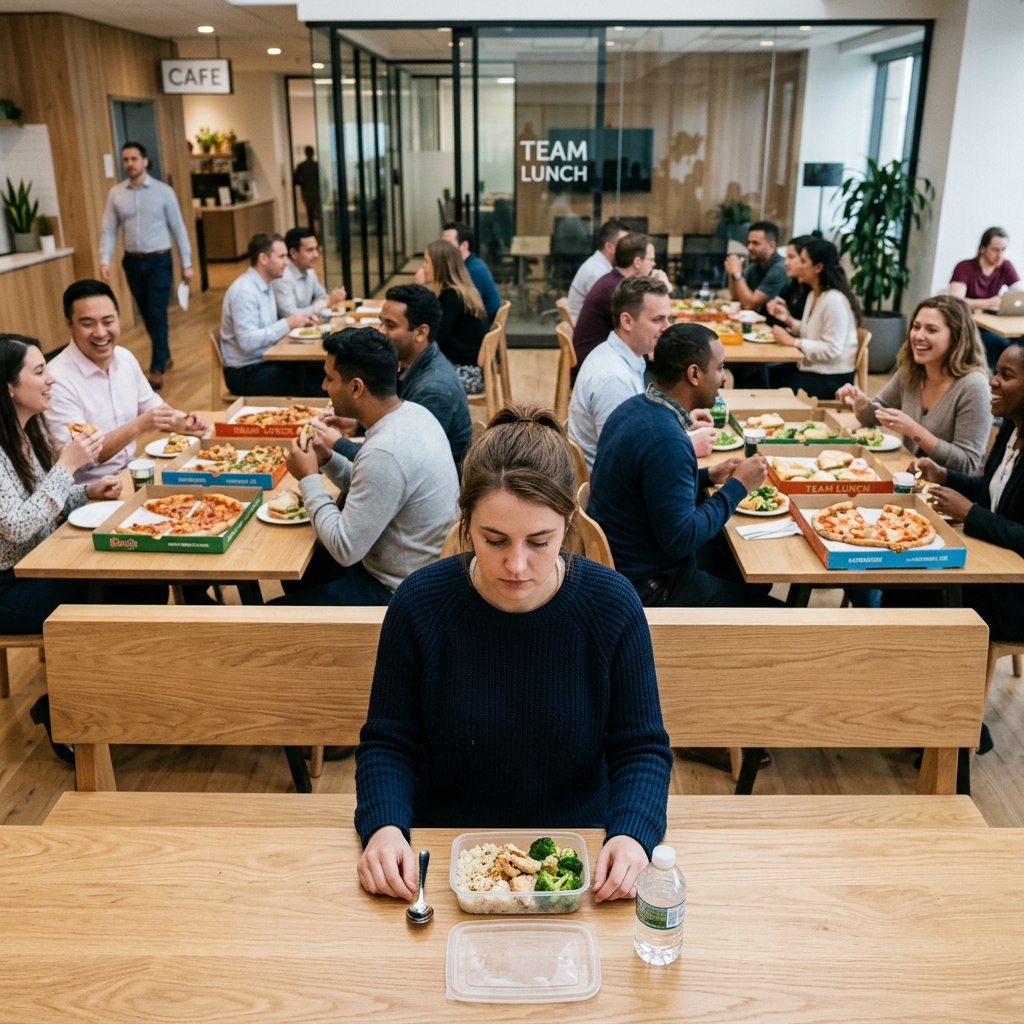
The catered meeting has sandwich platters. The team lunch is at the pizza place. The client dinner is at a steakhouse with flour-dusted everything. Here's how to navigate work life with celiac without becoming "that person."
Want to save this recipe?
Enter your email and we'll send it to you! Plus, get new recipes every week.
The Email That Made My Stomach Drop (And It Wasn't Gluten)
"Team — Lunch is on the company tomorrow! We've ordered catering from Panera. See you in the conference room at noon! 🎉"
I stared at that email for five minutes. Panera. A bakery-café. Where every salad shares counter space with flour-dusted bread bowls and croissants.
My options were: (a) eat nothing and sit there awkwardly while everyone devours sandwiches, (b) bring my own sad Tupperware and field 12 questions about "your diet thing," or (c) quietly skip the lunch and miss the team bonding entirely.
If you have celiac disease and a job, you've been here. The workplace is a minefield of catered meetings, birthday cakes, team lunches at unsafe restaurants, and well-meaning colleagues who leave donuts on your desk because "one won't hurt."
You can't quit your job. But you can build a system that protects your health without tanking your career. Here's the playbook I wish someone had given me on day one.
The 3 Workplace Scenarios (And Exactly What to Do)
Scenario 1: The Catered Office Meeting
This is the most common landmine. Someone orders sandwich trays, pizza, or a pasta spread for the entire team. You're expected to eat and socialize. Here's the move:
The 48-Hour Pre-Game:
When you see the email announcement, reply (or DM the organizer) within 48 hours:
*"Hey [Name], thanks for organizing! Quick heads-up — I have celiac disease (autoimmune, not a preference), so I can't eat from shared catering due to cross-contamination. I'll bring my own meal so no one needs to worry about me. Really appreciate the heads up!"*
This does three critical things:
Your Emergency Office Kit:
Keep a stash of safe, shelf-stable food at your desk at all times. You never know when a surprise "lunch meeting" drops. Stock:
Pro Tip: Make your brought-in meal look *good*. If you show up with a beautiful grain bowl with roasted chicken, avocado, and pickled onions, people will look at YOUR food with envy, not pity. Presentation kills the "sad lunch" narrative.
Scenario 2: The Team Restaurant Lunch
Your manager says: "Team lunch tomorrow at [Italian place / burger joint / sushi spot]!" You have two moves depending on how much lead time you have:
If you have 24+ hours:
If it's a surprise ("let's go NOW!"):
Before you go, pull up Check Gluten and scan the menu items you're considering. Our AI will flag hidden gluten in sauces, marinades, and seasonings that the waiter might not know about.
Scenario 3: The Client Dinner / Business Event
This is the high-stakes one. You're representing your company. The client chose the restaurant. You need to look professional, polished, and NOT be the person who derails the table with a 10-minute allergy conversation with the server.
The Stealth Protocol:
The "Do I Tell My Boss?" Decision
This is deeply personal, but here's a framework:
Tell your direct manager if:
What to say:
*"I wanted to give you a heads-up that I have celiac disease — it's an autoimmune condition managed by a strict medical diet. It occasionally affects logistics around team meals and events, but I have a system to handle it. I just wanted you to be aware in case it ever comes up."*
You do NOT need to:
Surviving the Office Kitchen
If you work in an office with a shared kitchen, you need ground rules for yourself:
Work Travel: Hotels, Airports & Conferences
Business travel adds a whole new layer of stress. Here's the cheat sheet:
Hotels:
Conferences:
Airport Tips:
Your Career Is Not a Casualty of Celiac Disease
Here's what nobody tells you: Having celiac disease at work actually builds a skill that employers secretly value — ruthless preparation and adaptability. You're the person who always has a backup plan. You research before you act. You communicate proactively.
Those are leadership skills. You just happen to have learned them from a medical condition.
Don't shrink. Don't skip the lunch. Don't eat the unsafe food to avoid awkwardness. Show up, bring your beautiful food, steer the conversation, and let your work do the rest.
📩 Want more tips like this?
Join celiacs getting weekly gluten-free tips, recipes, and hidden gluten alerts.
No spam. Unsubscribe anytime.
FAQs
Can I request ADA accommodations for celiac disease at work?
Yes. Celiac disease qualifies as a disability under the ADA. You can request reasonable accommodations such as a dedicated area to store and prepare food, or flexibility during catered events. Consult with HR if needed.
What if my coworkers make comments about my food?
Keep it light: "Yeah, my immune system has strong opinions about bread! But this grain bowl is actually amazing." Humor + confidence shuts down most comments. If it becomes harassment, document it and escalate to HR.
Should I eat unsafe food to avoid awkwardness at a client dinner?
Absolutely not. No business deal is worth weeks of autoimmune flare, brain fog, and potential long-term intestinal damage. You can navigate any dinner gracefully with the stealth protocol above.
How do I handle the office birthday cake situation?
Bring your own treat to keep in the freezer for cake moments. When the cake comes out, pull out your GF brownie or cookie. "I brought my own — celiac thing. But happy birthday, Mike!" Don't make it a bigger deal than it is.
What's the best way to meal prep for a full work week?
Batch cook on Sunday. Our freezer dump meal guide has 10 recipes you can freeze and grab each morning. No more scrambling for safe lunch options at noon.
Find Gluten-Free Lifestyle on Amazon
Shop certified gluten-free options
Top Gluten-Free Picks
📢 Found this helpful? Share it!
The Ultimate Celiac Survival Bundle
Stop stressing over cross-contamination and what to make for dinner. Get our complete 500+ recipe cookbook, dining out guide, and label reading cheat sheets.
200+ GF Baking Recipes
& Fast Food Protocols
Instant PDF Download • 60-Day Money Back Guarantee
About the Author
Sarah Mitchell
Lead Content Writer & Nutritionist, B.S. Nutrition Science
Sarah was diagnosed with celiac disease in 2018 and writes evidence-based guides combining clinical nutrition knowledge with 6+ years of personal gluten-free living experience. All health content is medically reviewed by our advisory team.
Meet our full team →Medical Disclaimer: This article is for informational purposes only and is not a substitute for professional medical advice. Always consult your physician or a registered dietitian before making dietary changes related to celiac disease or gluten sensitivity. Read full disclaimer.
Related Articles
25 Things Only Someone with Celiac Disease Will Understand
The bread aisle grief, the restaurant anxiety, the "but you look fine" comments. If you know, you know. This is the most relatable list on the internet for celiacs.
Celiac Disease and Dating: The Honest Guide Nobody Writes
How to tell someone you have celiac on a first date, handle the "it is just a little gluten" comments, navigate shared kitchens, and build a relationship where your partner actually gets it.
The Real Cost of Being Gluten-Free in 2026 (And How to Cut It in Half)
GF bread costs $7.49. Regular bread costs $2.49. Multiply that by every product in your kitchen and you are paying a "celiac tax" of $2,000-$4,000 per year. Here is how to fight back.
The Best Gluten-Free Snacks for Hiking, Camping, and Road Trips
Trail mix from the gas station will wreck you. Pack these celiac-safe, high-energy snacks that survive heat, altitude, and a week in your backpack without refrigeration.