Gluten-Free Dog Treats: Why Your Pet's Food Matters in a Celiac Household
This post may contain affiliate links. Please read our disclosure policy.
My dog licked my face after eating a wheat-based treat and I got glutened. Sounds crazy? It happened. Here's why pet food matters when you have celiac, and the best GF dog treats that keep everyone safe.
Want to save this recipe?
Enter your email and we'll send it to you! Plus, get new recipes every week.
My Dog Glutened Me. Yes, Really.
Before you laugh — hear me out.
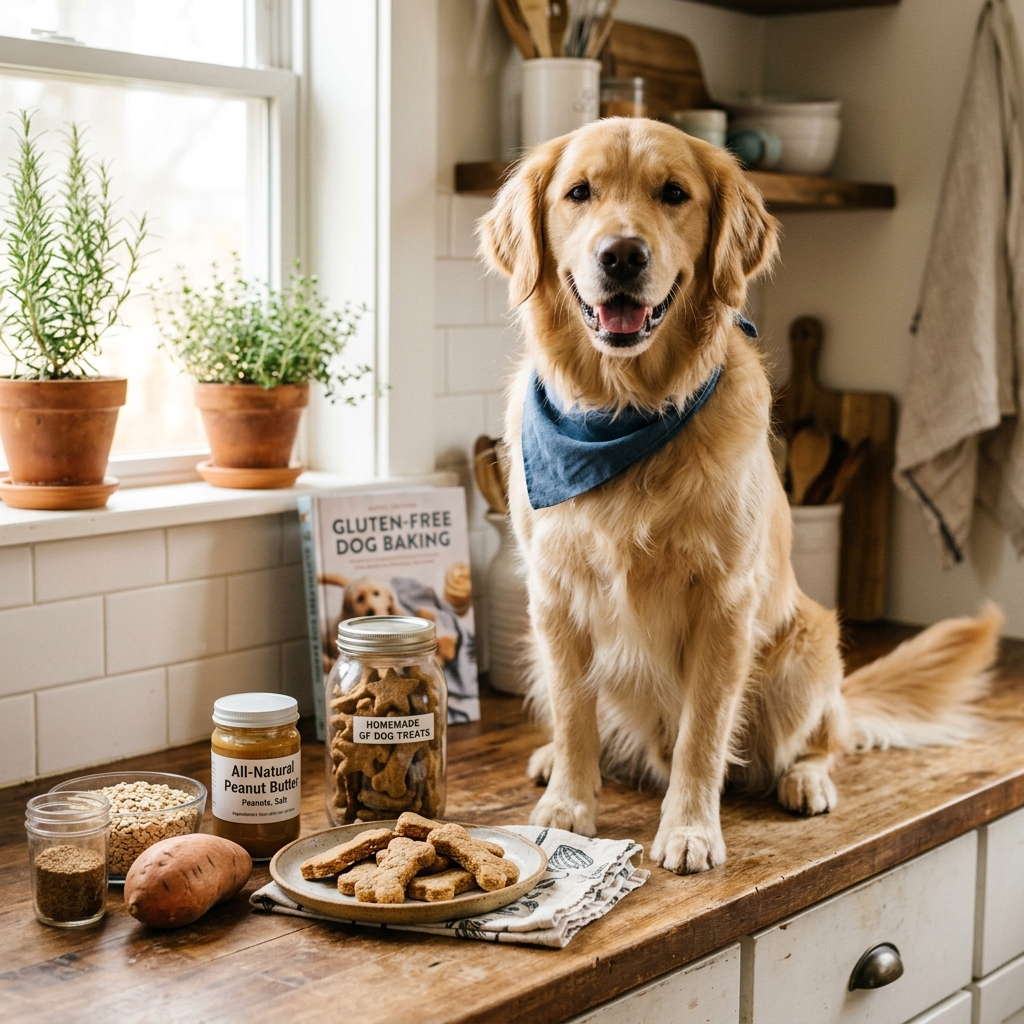
My golden retriever, Max, had just eaten a Milk-Bone. The first ingredient? Wheat flour. He came over, as goldens do, and licked my face. My lips. Directly.
Two hours later: bloating. Four hours: brain fog. By evening: the full celiac flare.
Was it definitely the dog treat? I can't prove it scientifically. But I'd eaten perfectly clean all day. The only wheat that came near my body was from Max's slobbery, wheat-coated mouth.
My allergist's reaction? "Actually, that's more common than you'd think."
After talking to other celiacs online, I found DOZENS of people who'd had similar experiences — getting glutened from dog kisses, handling pet food, or even touching surfaces their dog had drooled on after eating wheat-based treats.
This is the guide I wrote after switching our entire household — including our pets — to gluten-free.
Why Pet Food Matters for Celiacs
The Cross-Contamination Pathways
How Much Gluten Does It Take?
For celiacs, as little as 10mg of gluten (about 1/100th of a slice of bread) can trigger intestinal damage. A single wheat-based dog treat contains significantly more than that. Even trace amounts from a lick or hand contact can push sensitive celiacs over the threshold.
The Best Gluten-Free Dog Treats
🏆 Top Picks (Certified or Clearly GF)
Zuke's Mini Naturals — Made with chicken, rice, and real fruit. NO wheat, corn, or soy. Perfect training treats. Small size, dogs love them. My #1 pick for daily treats.
Blue Buffalo Bits — Soft training treats. No wheat. Made with real chicken and sweet potato. Great for puppies and adult dogs.
Fruitables Skinny Minis — Low calorie, no wheat, made with real fruit and pumpkin. Excellent for dogs on a diet.
Greenies Grain-Free Dental Treats — Dental hygiene + no wheat/grain. Helps with dog breath too.
Rachael Ray Nutrish Grain-Free — Multiple flavors. No wheat, corn, soy, or grains. Affordable and widely available.
⭐ GF Dog Food (Full Meals)
Taste of the Wild — Grain-free kibble. Multiple protein options (bison, salmon, venison). One of the most popular grain-free dog foods. Great value.
Blue Buffalo Wilderness — High-protein, grain-free. Real chicken as first ingredient. Well-reviewed.
Merrick Grain-Free — Made in the USA. Multiple protein options. No wheat, corn, soy, or gluten grains.
🍌 DIY GF Dog Treats (3 Easy Recipes)
Peanut Butter Biscuits (3 ingredients):
Sweet Potato Chews:
Banana Oat Bites:
🔍 Still reading labels the hard way?
Check Gluten scans any food label in 3 seconds and tells you exactly what's safe. Trusted by celiacs worldwide.
The Celiac Pet Household Rules
Common Dog Treats That Contain Wheat
Frequently Asked Questions
Can my dog be celiac or gluten-intolerant?
Yes! Some dogs (especially Irish Setters) can develop gluten-sensitive enteropathy — essentially canine celiac disease. Symptoms include chronic diarrhea, weight loss, and poor coat quality. If your dog has these symptoms, talk to your vet about a grain-free trial.
Is grain-free dog food safe? I heard it was linked to heart disease.
The FDA investigated a potential link between grain-free diets and canine dilated cardiomyopathy (DCM). The investigation found no definitive causal link. The concern was primarily about diets heavy in peas, lentils, and potatoes as primary ingredients. Consult your vet for your specific dog's needs.
Do I need to switch ALL pet food in my house to GF?
If you have celiac and handle pet food regularly, yes — it's the safest approach. At minimum, switch treats (you handle these most often) and keep kibble in a sealed container away from food prep areas.
What about cat food?
Most dry cat food contains wheat or corn gluten meal. Switch to a grain-free option like Blue Buffalo Wilderness Cat or Taste of the Wild Cat. Wet cat food is less likely to contain wheat.
🔍 Not sure about a product?
Check any food label instantly with our free AI gluten scanner — detects 500+ hidden gluten sources in 3 seconds.
Find Gluten-Free Lifestyle on Amazon
Shop certified gluten-free options
Top Gluten-Free Picks
📢 Found this helpful? Share it!
Stop Guessing. Start Scanning.
Every ingredient label has hidden gluten risks. Check Gluten's AI catches them all — in 3 seconds flat.
Camera + text input
Priority support
No credit card required • Cancel anytime
The Ultimate Celiac Survival Bundle
Stop stressing over cross-contamination and what to make for dinner. Get our complete 500+ recipe cookbook, dining out guide, and label reading cheat sheets.
200+ GF Baking Recipes
& Fast Food Protocols
Instant PDF Download • 60-Day Money Back Guarantee
About the Author
Sarah Mitchell
Lead Content Writer & Nutritionist, B.S. Nutrition Science
Sarah was diagnosed with celiac disease in 2018 and writes evidence-based guides combining clinical nutrition knowledge with 6+ years of personal gluten-free living experience. All health content is medically reviewed by our advisory team.
Meet our full team →Medical Disclaimer: This article is for informational purposes only and is not a substitute for professional medical advice. Always consult your physician or a registered dietitian before making dietary changes related to celiac disease or gluten sensitivity. Read full disclaimer.
Related Articles
The Celiac College Survival Guide: Dining Halls, Dorm Life & Social Eating
How to navigate dining halls, dorm kitchens, late-night pizza runs, and social eating as a celiac college student. From meal plans to microwave hacks — everything you need.
Is Your Medication Gluten-Free? Hidden Gluten in Pills, Vitamins & Supplements
Wheat starch, barley malt, and modified food starch are used as fillers in hundreds of medications. Here is how to check if your pills are safe for celiac disease.
25 Things Only Someone with Celiac Disease Will Understand
The bread aisle grief, the restaurant anxiety, the "but you look fine" comments. If you know, you know. This is the most relatable list on the internet for celiacs.
Celiac Disease and Dating: The Honest Guide Nobody Writes
How to tell someone you have celiac on a first date, handle the "it is just a little gluten" comments, navigate shared kitchens, and build a relationship where your partner actually gets it.