Gluten-Free Baking 101: The Secret to Fluffy Bread & The Xanthan Gum Rule (2026)
This post may contain affiliate links. Please read our disclosure policy.
Why does gluten-free bread always turn out like a brick? Why did your cookies spread into a giant puddle? The secret isn't just finding the right flour—it's understanding the chemistry of xanthan gum and flour hydration.
Want to save this recipe?
Enter your email and we'll send it to you! Plus, get new recipes every week.
The Brick In The Oven
My first attempt at gluten-free baking was a disaster. I wanted to make a loaf of banana bread. I took my grandmother's famous recipe, bought a bag of rice flour, and swapped it 1-to-1 for the wheat flour.
Forty-five minutes later, I pulled out a dense, crumbly, sad little brick that tasted like grit and fell apart when I tried to cut it.
I didn't understand what went wrong until I learned the golden rule of celiac baking: Gluten is not just a protein. It is the structural glue that holds baking together.
When you remove gluten, you remove the elasticity, the chew, and the structure. You cannot just swap rice flour for wheat flour and expect it to work. You have to replace the *function* of gluten.
Here is the ultimate guide to mastering gluten-free baking, choosing the right flour blends, and understanding the magic of xanthan gum.
The Problem with Single Flours
If a recipe calls for "All-Purpose Flour," you cannot simply use Almond Flour, Coconut Flour, or Rice Flour instead.
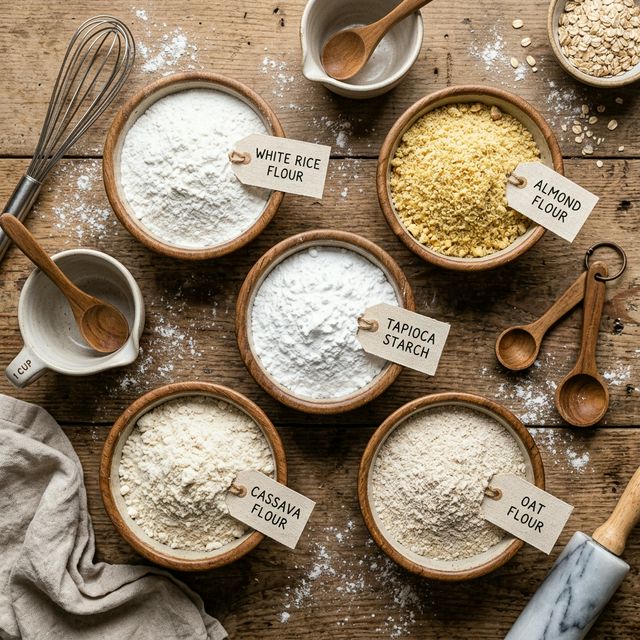
To replicate wheat flour, you need a blend. A good GF flour blend combines heavy flours (for structure), light starches (for fluffiness), and a binder (to replace the sticky gluten).
The 1-to-1 Flour Blends (The Easiest Method)
If you want to bake normal recipes without doing a chemistry degree, you need a "Measure-for-Measure" or "1-to-1" flour blend. These are pre-mixed bags designed to be swapped directly into standard wheat recipes.
Not all blends are created equal. Here are the top tier choices:
🏆 King Arthur Measure for Measure: The gold standard for cookies, muffins, and quick breads. (Do NOT confuse this with their "All-Purpose GF Flour," which does not contain xanthan gum).
🏆 Cup4Cup: Created by the chefs at The French Laundry. It produces the absolute best, flakiest pie crusts and pastries, but it contains dairy (milk powder), so it's not safe if you are lactose intolerant.
🏆 Bob's Red Mill 1-to-1 Baking Flour: Excellent, affordable, and readily available. (Look for the BLUE bag. The RED bag is their all-purpose flour without a binder).
🔍 Still reading labels the hard way?
Check Gluten scans any food label in 3 seconds and tells you exactly what's safe. Trusted by celiacs worldwide.
The Magic of Xanthan Gum
What is xanthan gum? It is a plant-based carbohydrate that acts as a thickening and binding agent. In gluten-free baking, xanthan gum is the gluten replacement. It provides the "stretch" and elasticity.
If you buy a 1-to-1 blend (like the ones listed above), xanthan gum is already mixed in.
If you are mixing your own flours, or using a blend that doesn't have it, you MUST add it, or your baked goods will turn into dust.
The General Rule for Adding Xanthan Gum:
The 3 Golden Rules of GF Baking
Even with the perfect flour blend, GF baking acts differently than wheat baking. Follow these three rules:
Rule 1: You MUST Let the Batter Rest
GF flours (especially rice and tapioca) take longer to absorb liquid than wheat flour. If you mix GF cookie dough and bake it immediately, the cookies will taste gritty and sandy.
The Fix: Let your cookie dough, muffin batter, or cake batter rest for 30 minutes before baking. For cookies, chilling the dough in the fridge for an hour is even better. This allows the starches to hydrate, removing the gritty texture.
Rule 2: Weigh Your Flour
Do not scoop GF flour directly out of the bag with a measuring cup. GF flour compresses easily; you might accidentally pack 30% more flour into the cup, leading to dry, dense baked goods.
The Fix: Use a kitchen scale and measure by weight (grams), or use the "spoon and level" method (spoon the flour gently into the measuring cup, then level it off with a knife).
Rule 3: Add More Moisture
GF baking dries out incredibly fast. A cake that is moist on Tuesday will be a brick by Thursday.
The Fix: GF recipes often require an extra egg yolk, a tablespoon of sour cream/yogurt, or a bit more oil to retain moisture over several days.
Yeast Bread: The Final Boss
Making gluten-free yeast bread is the hardest challenge in GF baking. Because there is no gluten network to trap the yeast's carbon dioxide bubbles, the bread struggles to rise and often sinks in the middle.
The Secret to GF Bread:
GF bread dough does not look like wheat dough. It does not form a smooth, kneadable ball. It looks like thick, wet cake batter. Do not add more flour trying to make it "doughy"—you will ruin it. You just scrape the wet batter into a loaf pan, let it rise once, and bake.
If you want perfect sandwich bread without the hassle, invest in a dedicated Gluten-Free Bread Maker.
📩 Want more tips like this?
Join celiacs getting weekly gluten-free tips, recipes, and hidden gluten alerts.
No spam. Unsubscribe anytime.
Frequently Asked Questions
Can I just leave the xanthan gum out?
Unless you are making something that naturally doesn't need structure (like a very fudgy brownie), no. If you are sensitive to xanthan gum, you can substitute guar gum or psyllium husk powder.
Why did my GF bread sink in the middle?
You likely let it rise too long. GF bread only has one rise. Once it reaches the top of the pan, it must go straight into the oven. If it over-proofs, the weak structure collapses.
Are GF baked goods healthier?
Generally, no. To replicate the texture of wheat, GF flours rely heavily on refined starches (tapioca, potato, white rice) and often require extra sugar and fat to taste good. They are safe for celiacs, but they are not inherently "diet" food.
🔍 Not sure about a product?
Check any food label instantly with our free AI gluten scanner — detects 500+ hidden gluten sources in 3 seconds.
Find Gluten-Free Food Safety on Amazon
Shop certified gluten-free options
Top Gluten-Free Picks
📢 Found this helpful? Share it!
Stop Guessing. Start Scanning.
Every ingredient label has hidden gluten risks. Check Gluten's AI catches them all — in 3 seconds flat.
Camera + text input
Priority support
No credit card required • Cancel anytime
The Ultimate Celiac Survival Bundle
Stop stressing over cross-contamination and what to make for dinner. Get our complete 500+ recipe cookbook, dining out guide, and label reading cheat sheets.
200+ GF Baking Recipes
& Fast Food Protocols
Instant PDF Download • 60-Day Money Back Guarantee
About the Author
Sarah Mitchell
Lead Content Writer & Nutritionist, B.S. Nutrition Science
Sarah was diagnosed with celiac disease in 2018 and writes evidence-based guides combining clinical nutrition knowledge with 6+ years of personal gluten-free living experience. All health content is medically reviewed by our advisory team.
Meet our full team →Medical Disclaimer: This article is for informational purposes only and is not a substitute for professional medical advice. Always consult your physician or a registered dietitian before making dietary changes related to celiac disease or gluten sensitivity. Read full disclaimer.
Related Articles
Easy Gluten-Free Meatballs (Better Than Store-Bought)
Tender, juicy, authentic Italian meatballs made entirely gluten-free. No special GF breadcrumbs required—we use a secret pantry ingredient to keep them perfectly soft!
Ooey Gooey Gluten-Free Cinnamon Rolls
You CAN have pillowy, melt-in-your-mouth cinnamon rolls on a gluten-free diet. This yeast-based recipe creates the magnificent, gooey breakfast treat of your dreams.
Fluffy & Buttery Gluten-Free Biscuits
Mile-high, flaky, buttery gluten-free biscuits that don't crumble when you butter them. Only 6 ingredients and ready in 30 minutes!
Easy Gluten-Free Sourdough Bread For Beginners
Missing real, crusty, tangy sourdough bread? This step-by-step guide walks you through making a gluten-free sourdough starter and baking your first perfect loaf.