Creamy Gluten-Free Pasta Carbonara: The 20-Minute Italian Classic
This post may contain affiliate links. Please read our disclosure policy.
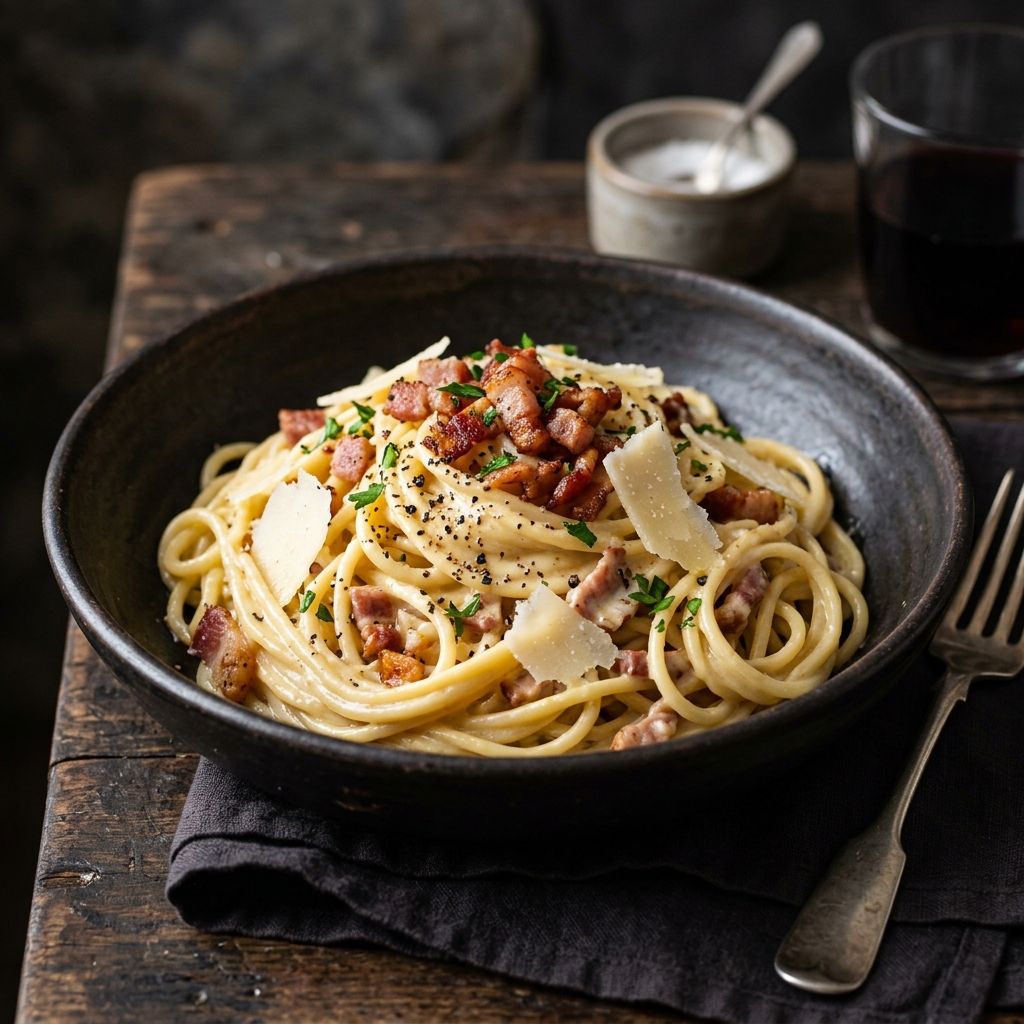
Real carbonara doesn't use cream — it's all about the egg, cheese, and pasta water alchemy. This gluten-free version is silky, rich, and so authentic that my Italian mother-in-law finally stopped asking "are you sure you can't just eat a little regular pasta?"
Want to save this recipe?
Enter your email and we'll send it to you! Plus, get new recipes every week.
The Dish I Mourned the Most
When I was diagnosed with celiac disease, people would ask: "What food do you miss the most?"
Everyone expected me to say bread. Or pizza. Or cake.
But it was carbonara.
Specifically, the carbonara at that little Italian place on Harrison Street where my husband proposed. The carbonara my Italian mother-in-law makes every Sunday — mountains of spaghetti coated in that impossibly silky egg-and-cheese sauce, with crispy bits of guanciale scattered throughout.
The first time I tried making it with GF pasta, it was a disaster. The pasta fell apart into mush. The sauce turned into scrambled eggs. My mother-in-law patted my hand and said, "Maybe just eat the meat and cheese, dear."
That was the low point.
But after months of testing — different GF pastas, different techniques, different timing — I cracked it. And the night I served my version to my mother-in-law and she said "questa è carbonara vera" (this is real carbonara)… I'm not going to lie, I cried a little.
Why This Recipe Works
The Great Carbonara Debate (No Cream. Ever.)
Let's settle this right now: real Italian carbonara does not contain cream.
If you put cream in carbonara, an Italian grandmother somewhere feels a disturbance in the Force. The creaminess comes entirely from:
When these four things combine at the right temperature, they form a silky, glossy sauce that coats every strand of pasta. That's the alchemy of carbonara. No cream needed. No cream wanted.
🔍 Still reading labels the hard way?
Check Gluten scans any food label in 3 seconds and tells you exactly what's safe. Trusted by celiacs worldwide.
Ingredients Explained
How to Make GF Carbonara (Step by Step)
Step 1: Start the Pasta Water
Fill a large pot with water. Salt it GENEROUSLY — it should taste like the sea. This is important because:
Bring to a rolling boil.
Step 2: Cook the Pork (While Water Heats)
Put the pancetta cubes in a large, COLD skillet with a tablespoon of olive oil. Turn heat to medium.
Starting cold is key. Cold start = the fat renders slowly and evenly, the edges get crispy while the inside stays tender. Starting hot = burnt outside, chewy inside.
Cook 6-8 minutes, stirring occasionally, until the edges are golden and crispy and the fat has pooled in the pan. Remove from heat. Leave the fat — it's liquid gold.
Step 3: Make the Egg-Cheese Mixture
While the pork cooks, whisk together:
Whisk until smooth and thick. This is your sauce. Set aside.
Pro Tip: The cheese MUST be finely grated. Chunky cheese won't melt properly and you'll get clumps instead of a smooth sauce. A Microplane is the tool for this job.
Step 4: Cook the Pasta (Almost)
Cook GF pasta according to the package, but pull it 1 minute early. GF pasta goes from al dente to mush FAST. Pulling early lets it finish cooking in the pan without going soft.
CRITICAL: Before draining, ladle out 2 cups of pasta water. This starchy water is what makes the sauce creamy. You might not use all of it, but you'll be glad you have it.
Step 5: The 90-Second Magic Window
This is where carbonara is made or ruined. You have about 90 seconds to get it right:
If it's too thick: Add pasta water, 2 tablespoons at a time, tossing between additions. You want a sauce that's glossy and *flowing* — it should coat the pasta, not clump on it.
If it looks like scrambled eggs: The pan was too hot. Next time, let the skillet cool for 2 full minutes after removing from heat before adding the egg mixture. You can rescue slightly scrambled carbonara by adding more pasta water and tossing aggressively.
Step 6: Serve Immediately
Carbonara waits for NO ONE. The sauce continues to thicken as it cools, so serve the second it's done.
Plate in warm bowls (run them under hot water for 30 seconds, then dry). Top with extra Pecorino, a generous amount of cracked black pepper, and a drizzle of your best olive oil.
Why GF Pasta Is Actually BETTER for Carbonara
Here's something most people don't realize: GF pasta releases significantly more starch into the cooking water than wheat pasta.
For most recipes, this is a disadvantage (gummy pasta, cloudy water). But for carbonara, it's a SUPERPOWER.
More starch in the pasta water = a creamier, more emulsified sauce with less effort. The extra starch acts as a natural thickener and binder for the egg-cheese sauce.
This means GF carbonara can actually be EASIER to get right than traditional carbonara, which requires very skilled technique to avoid a watery or scrambled sauce.
Take that, gluten.
📩 Want more tips like this?
Join celiacs getting weekly gluten-free tips, recipes, and hidden gluten alerts.
No spam. Unsubscribe anytime.
Expert Tips
Temperature Is Everything
The #1 carbonara mistake (GF or regular) is cooking the eggs with too much heat. The skillet MUST be off the heat when you add the egg mixture. Residual heat is all you need. If you're nervous, take the skillet off heat, count to 60, THEN add the egg mixture.
Salt the Water, Not the Sauce
The pasta water should be salty. The Pecorino is salty. The pancetta is salty. You should NOT need to add any additional salt to the finished dish. Taste before adding anything.
Use the Right Pasta Shape
Pasta Water Is Liquid Gold
Don't dump ALL the pasta water. Reserve at least 2 cups. You can always add more to loosen the sauce. You can't un-add water.
Ingredient Swaps
How to NOT Scramble Your Eggs (The Carbonara Safety Net)
If you're nervous about the egg technique, here's the foolproof safety net:
Frequently Asked Questions
Why did my carbonara turn into scrambled eggs?
The pan was too hot when you added the egg mixture. The residual heat should gently cook the eggs into a creamy sauce, not scramble them. Solutions: (1) Take pan OFF heat for 2 minutes. (2) Add eggs away from the burner. (3) Toss constantly — never let the eggs sit still on a hot surface.
Can I use regular bacon instead of pancetta?
Yes! Thick-cut bacon works well. The flavor will be smokier (American bacon is smoked; pancetta is not). Cut it into 1/2 inch pieces and cook the same way.
What's the best GF pasta for carbonara?
Barilla GF spaghetti is our top pick. It holds its shape, has great texture, and releases excellent starch. Jovial brown rice spaghetti is a close second.
Can I reheat carbonara?
Technically yes, but honestly? Carbonara is a "make and eat immediately" dish. Reheating often scrambles the eggs or dries out the sauce. If you must reheat, add pasta water and warm VERY gently over low heat, tossing constantly.
Is Pecorino Romano gluten-free?
Natural aged cheeses like Pecorino Romano and Parmigiano-Reggiano are almost always gluten-free. But always check the label for any additives — scan with Check Gluten to be certain.
Scan your GF pasta, cheese, and pancetta with Check Gluten before cooking — even cured meats can contain hidden wheat starch or malt-based ingredients.
Creamy Gluten-Free Pasta Carbonara: The 20-Minute Italian Classic
Real carbonara doesn't use cream — it's all about the egg, cheese, and pasta water alchemy. This gluten-free version is silky, rich, and so authentic that my Italian mother-in-law finally stopped asking "are you sure you can't just eat a little regular pasta?"
Ingredients
- 1 lb (450g) gluten-free spaghetti or rigatoni
- 6 oz (170g) pancetta or guanciale, cut into small cubes (or thick-cut bacon)
- 4 large egg yolks + 2 whole eggs
- 1 1/2 cups (150g) finely grated Pecorino Romano cheese (or Parmesan)
- 1 teaspoon freshly cracked black pepper + more for serving
- 1 tablespoon extra virgin olive oil
- Salt for pasta water
- 1 cup reserved starchy pasta water
Instructions
Bring a large pot of generously salted water to a boil. Cook the GF pasta according to package directions, but pull it 1 minute BEFORE it's al dente (it will finish cooking in the pan). RESERVE 2 cups of starchy pasta water before draining.
While the pasta cooks, cut the pancetta into small cubes. Cook in a large, cold skillet (start cold for maximum fat render) with olive oil over medium heat for 6-8 minutes until the edges are crispy and the fat has rendered. Remove from heat.
In a bowl, whisk together egg yolks, whole eggs, grated Pecorino, and black pepper until smooth. This is your carbonara sauce.
Working quickly: add the drained pasta directly to the skillet with the pancetta (skillet OFF the heat). Toss to coat the pasta in rendered fat.
Pour the egg-cheese mixture over the hot pasta and toss VIGOROUSLY with tongs for 60-90 seconds. The residual heat will gently cook the eggs into a silky, creamy sauce. If it's too thick, add reserved pasta water 2 tablespoons at a time until you achieve a glossy, flowing sauce.
Serve immediately in warm bowls. Top with extra Pecorino, cracked black pepper, and a drizzle of olive oil.
Nutrition Information
Calories: 520 per serving | Carbs: 48g | Protein: 26g | Fat: 24g
Nutrition information is an estimate provided by an online calculator.
Find Gluten-Free Recipes on Amazon
Shop certified gluten-free options
Top Gluten-Free Picks
📢 Found this helpful? Share it!
Stop Guessing. Start Scanning.
Every ingredient label has hidden gluten risks. Check Gluten's AI catches them all — in 3 seconds flat.
Camera + text input
Priority support
No credit card required • Cancel anytime
The Ultimate Celiac Survival Bundle
Stop stressing over cross-contamination and what to make for dinner. Get our complete 500+ recipe cookbook, dining out guide, and label reading cheat sheets.
200+ GF Baking Recipes
& Fast Food Protocols
Instant PDF Download • 60-Day Money Back Guarantee
About the Author
Rachel Lopez
Recipe Developer & Certified Pastry Chef
Rachel is a classically trained pastry chef who transitioned to gluten-free baking after her daughter was diagnosed with celiac disease. She develops and tests every recipe on Check Gluten, ensuring they work perfectly with GF ingredients.
Meet our full team →Medical Disclaimer: This article is for informational purposes only and is not a substitute for professional medical advice. Always consult your physician or a registered dietitian before making dietary changes related to celiac disease or gluten sensitivity. Read full disclaimer.
Related Articles
Easy Gluten-Free Meatballs (Better Than Store-Bought)
Tender, juicy, authentic Italian meatballs made entirely gluten-free. No special GF breadcrumbs required—we use a secret pantry ingredient to keep them perfectly soft!
Ooey Gooey Gluten-Free Cinnamon Rolls
You CAN have pillowy, melt-in-your-mouth cinnamon rolls on a gluten-free diet. This yeast-based recipe creates the magnificent, gooey breakfast treat of your dreams.
Fluffy & Buttery Gluten-Free Biscuits
Mile-high, flaky, buttery gluten-free biscuits that don't crumble when you butter them. Only 6 ingredients and ready in 30 minutes!
Easy Gluten-Free Sourdough Bread For Beginners
Missing real, crusty, tangy sourdough bread? This step-by-step guide walks you through making a gluten-free sourdough starter and baking your first perfect loaf.